
Every time I go to the Moscow Zoo, I can’t manage to see Timofey…. He’s such a secretive manul :( Does anyone know when he can be seen? Maybe he comes out at a certain time, like when they feed him?

Every time I go to the Moscow Zoo, I can’t manage to see Timofey…. He’s such a secretive manul :( Does anyone know when he can be seen? Maybe he comes out at a certain time, like when they feed him?
It all begins in May, in a crack in the rock or an old fox den lost among the hills of Tuva or the Mongolian steppes. A female manul gives birth to offspring (from two to six kittens). Each weighs less than 100 grams, and is only a little bigger than a matchbox, though already covered in thick down.
This is not the fluffy coat we are used to seeing in photos of adult manuls. Newborn manuls are gray, smoky, perfectly blending in with stone chips. Nature did not provide them with bright colors, because the mother has to leave to hunt, and the den must remain unnoticed by eagles and wolves.
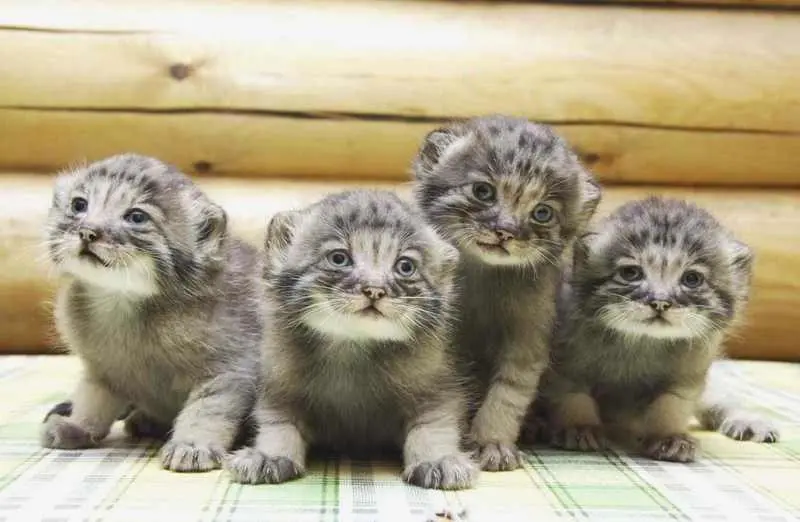
The manul’s appearance is entirely subordinated to one main task: blending into the landscape. Its grayish-ochre coat with barely visible stripes perfectly mimics scattered stones and withered steppe grass, allowing manuls to remain unnoticed.
Its low-set ears let it peek out from behind rocks without rising much above them. Shortened limbs help it press so close to the ground that even low grass, 5–7 centimeters high, becomes reliable cover. And its thickest fur, with up to 9,000 hairs per square centimeter, blurs the body’s outline, making it look like an ordinary stone or a protrusion of rock.

Could you please tell me the name of this wonderful Pallas's cat

