
Question about the new zoo in Khimki
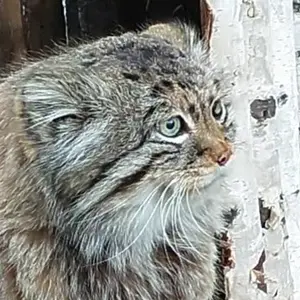
Roman, Vika, hello! Can you tell me a little about this new zoo or what kind of organization it is where you found our missing Loloshki? They say it's not a zoo, but some kind of organization that trades animals. Judging by the ownership (LLC), it's a private company. Why do zoos sell animals to private owners, who then resell them to other zoos? Can't zoos sell animals to each other without intermediaries? I don't know how it works, of course, but you're probably in the know and know more. Thank you!
Comments 8
Ctrl+Enter to send ⌘+Enter to send
A pressing question... The more zoos and other animal rescue centers there are where Pallas's cats live, the better for their population. I hope they have a good life there.
Oh, I thought this would be a comment under the post about Loloshek 😺
We know little about them. As far as we understand, they're a dealer whose main activity is supplying animals to zoos both in Russia and abroad. We also understand that they breed and house some animals.
Not all zoos can exchange animals directly with each other for various reasons. Exchanges (and sales) require obtaining documents and sometimes very complex logistical challenges—not all zoos are prepared to handle this themselves. Also, for example, sometimes a zoo might want to buy an animal taken from the wild in another country (not necessarily a rare or endangered species)—in such cases, dealers can also help.
We don't know how this works legally, but Pallas's cats were supplied to and kept by similar dealers in Europe, the US, and now in Russia. Amazonia Zoo is a member of SOZAR and actively works with all major Russian zoos through government procurement.
One might assume that these little Manuls were supposed to go somewhere, but something went wrong and they remained in the Amazon.
They both live there now. Incidentally, I'd like to point out that in Khimki, this is the legal address, and perhaps the actual address is different.
I am also quite curious about how Novosibirsk Zoo was convinced to agree to the deal with the Indian zoo. Greens Zoological Rescue and Rehabilitation Centre is better known by its brand name, Vantara, and is owned by the youngest son of Asia’s wealthiest man. Despite calling itself a "rescue center," the facility is notorious for sourcing animals from South Africa and other questionable origins. There is significant online debate regarding its legitimacy, including an investigative piece by Big Cat Rescue: https://bigcatrescue.org/conservation-news/vantara-the-illusion-of-conservation-or-a-billionaires-private-zoo. They have apparently hired numerous influencers to tour the facility and post glowing reviews across Instagram, TikTok, and YouTube.
Roman Paulovverified_filled ,
Oh, Roman, I didn't understand what was supposed to be under the post about the Loloshiks. Sorry. Can you move it?
Roman Paulovverified_filled ,
Thanks for the clarification ♥️
Now it's more or less clear 🙏
Julia, Да всё ОК, пусть будет так. Может быть тут будет какая-то дискуссия :)
Yes, everything is generally clear. The company is well-known in certain circles; it has been fulfilling government contracts for 10 years and collaborates with Russian zoos.
Why does a zoo sell animals to a company that specializes in animal trafficking? Because that's what such companies exist for. They're not going to sell them to a match factory or an oil refinery.
Why doesn't the zoo sell animals directly to other zoos? There are probably some reasons, most likely legal ones. The zoo is a state-owned organization, so its activities are regulated by all the same laws and regulations as a private company selling animals, plus the laws and regulations applicable to state-owned companies. It may well be cheaper to sell through an intermediary than directly. There are also questions about international buying and selling; it may be easier for a private company to do so. Furthermore, a private company's budget is generally managed privately, while a state-owned company's budget must meet additional requirements regarding transparency, accountability, and so on.
Why does a zoo sell animals at all? Because, firstly, they need money, and secondly, where are they going to put them, salt them? Setting Pallas's cat population records is certainly fun, but keeping animals costs money. Roughly speaking, it's like an airline. A plane makes money in the air, a plane spends money on the ramp. A Pallas's cat in a zoo enclosure spends money, but a sold Pallas's cat, even if it's just a one-time purchase, makes money. Keeping animals out of pure greed is a surefire way to go broke.
Pavel Burov, As for the details, it would be interesting to hear comments from experts. Specifically:
1. A set of laws on the sale of animals. Especially those listed in the Red Book.
2. A set of laws on cross-border trade in animals, especially those listed in the Red Data Book.
3. The body of laws on commercial activities of state organizations.
Of course, all this is in the context of animal trade between zoos, directly and through intermediaries. It also includes the possibility of acquiring animals from third parties through commercial intermediaries. What legal restrictions can be (cynically) overcome with money without formally breaking the law?
I wish I could find (let's say) a zoo lawyer who would agree to tell what can be told in public.